

Disruptive trade policies and geopolitical uncertainty have pushed U.S. companies to redesign supply chains for resilience. Nearshoring to Mexico is a strategic lever. And shorter supply chains translate to real advantages for shippers: same-day communication, faster decision cycles and greater control.
In 2025, cross-border freight between the U.S. and Mexico continued to grow. And by 2026, companies expect to invest $188 million in reshoring and production facility relocation – a huge increase from the average $65 million spent in 2025. For manufacturers and retailers, nearshoring improves landed cost predictability and mitigates long-haul risk while preserving speed to market.
The Reality of Cross-Border Complexity
No matter which border you’re crossing, cross-border shipping involves significantly more complexity than domestic moves. It is a multi-layered operation that requires regulatory expertise, bilingual and binational operation teams, flexible multi-modal operations, strategic terminal locations and more.
Minor documentation errors could result in delays and additional costs due to customs violations. Congestion at land ports – particularly high-volume crossings like Laredo and El Paso – can expose shipments to theft during dwell time. Variability in regional practices and language gaps can increase risk when providers lack bilingual teams with on-the-ground authority.
Cross-Border Shipping Modes
Two dominant models shape north–south moves:
- Through-Trailer (Door-to-Door): Freight remains in the same trailer from origin to final destination, often with only a tractor swap at the border. This approach minimizes touches and risk, making it optimal for high-value or time-sensitive goods (e.g., automotive components, temperature-controlled pharmaceuticals).
- Transload: Freight is transferred at a secure border facility from a Mexican carrier’s trailer to a U.S. carrier (or vice versa). With robust cross-dock controls, transloading can unlock cost efficiencies, capacity optimization and better trailer utilization, especially when U.S. tractors aren’t authorized for Mexico-bound moves.
The right choice depends on product, sensitivity (security or temperature), lane volatility and available infrastructure at crossing points.
Compliance As the Foundation
Regulatory expertise is table stakes. Logistics providers certified in both the Customs-Trade Partnership Against Terrorism (C-TPAT) and Mexico’s Authorized Economic Operator (AEO), the equivalent, can help expedite border crossings by reducing cargo inspections. Experience with Mexican customs compliance documentation, such as the Complemento Carta Porte system, helps avoid shipment holds or fines.
Accurate, end-to-end documentation – the bill of lading, commercial invoice, packing list and required trade forms – helps ensure seamless customer compliance. Leaders should treat compliance not as a paperwork function but as a core risk control linked to service reliability and brand protection.
Ensuring Cargo Security
As trade volumes increase, managing security becomes a high priority to ensure cargo integrity for every shipment. Enhanced security measures should be part of every transaction. Transportation and logistics providers with long-term experience understand the need to proactively manage risks and will invest in technology and processes to secure loads effectively. Relationships with local partners are critical in generating their support for the safety and security of the supply chain.
Effective programs combine technology (real-time GPS on tractors and trailers; seal-integrity protocols with verification at every handoff) with process (limited exposure windows, pre-approved secure rest stops) and local relationships that support intervention. C‑TPAT‑certified terminals and cross-dock facilities with 24/7 surveillance, fencing and lighting reduce opportunity windows.
Visibility and Bilingual Operations
End-to-end visibility is a necessity when shipping freight across borders. Real-time GPS, geofencing and event alerts must extend seamlessly into Mexico to avoid data gaps when freight changes hands.
Bilingual, binational teams accelerate exception resolution, align carrier partners and eliminate cultural barriers across regions. In practice, this means daily coordination by Spanish–English teams embedded at terminals and cross-docks with authority to escalate, re-route and resequence loads.
Strategic Infrastructure Matters
Location and crossing capabilities determine cycle time and exposure. Secure cross-docks in Laredo and El Paso enable rapid, controlled transloads; vetted Mexican carrier partnerships support through-trailer continuity for sensitive freight.
Leaders should prioritize providers with invested infrastructure – including terminals, yard security tech and trained teams – to ensure freight moves safely and efficiently across the border and to its final destination.
Werner’s Cross-Border Experience
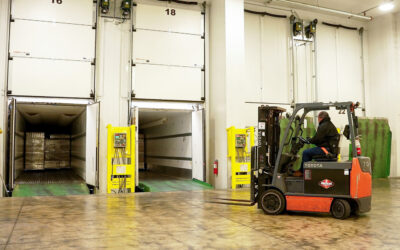
With 25+ years of Mexico operations, Werner offers a range of logistics services tailored to support freight movements across borders, including support of through-trailer service and transload modes for a wide range of industry sectors and high-value cargoes. Our multi-temperature cross-dock in Laredo, combined with vetted Mexican carrier partnerships, enables seamless and secure transfers. Our through-trailer capabilities support uninterrupted movement for sensitive shipments.
Bottom Line
While organizations may view nearshoring as a temporary reaction to supply chain disruptions, the benefits are strategic rather than tactical. The most successful organizations embrace nearshoring as a foundational strategy for a supply chain redesign that delivers resilience, redundancy and lower landed costs of goods.
Companies pursuing a nearshoring strategy to overcome the challenges of ongoing trade issues and disruptions must understand the complexities of cross-border supply chains. They should partner with a logistics provider that has the experience, infrastructure and technology to support every aspect of international moves.